
Death Worm™
PlayCreek GamesArcade
4.710.65K Reviews
- Version
- 3.0.021
- Installs
- 50.00M
- Age Rating
- Teen
Screenshots


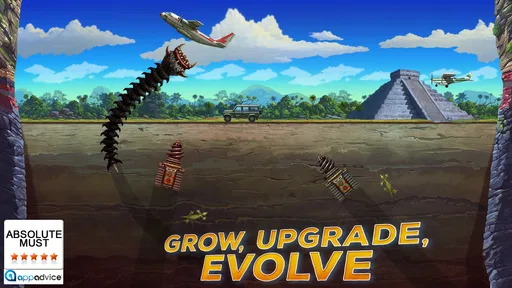
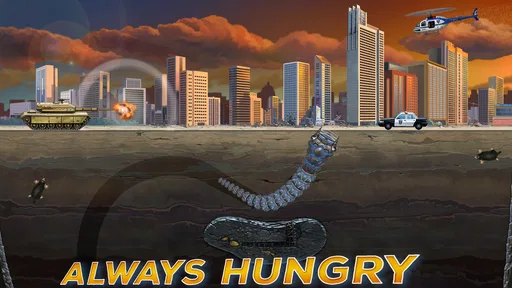

Our Review of Death Worm™
 Analysis by Appyee
I went into Death Worm™ expecting a quick arcade distraction, and that is exactly where it works best. You control a huge underground creature, burst through the surface, and attack targets before dropping back beneath the ground. The idea is immediately understandable, but the timing gives it more personality than a simple “move and hit” game. Every run asks you to judge when to surface, what to chase, and when to disappear before danger catches up with you.
That simple loop explains why this game has remained visible for so long. PlayCreek Games released it in July 2011, yet it still feels suited to short modern play sessions. It is free to start, belongs firmly to the arcade category, and carries a Teen content rating because the action includes cartoon-style destruction and aggressive encounters. I would not describe it as a deep role-playing game or a long story adventure. Its appeal is more immediate: open the game, make a few chaotic decisions, and try to perform better than you did last time.
What to expect when you begin
The first thing to understand is that the worm is not a traditional character moving across a flat platform. Its movement is tied to the ground and the space beneath it, so the most important skill is learning the rhythm between diving and emerging. Surface too early and you may expose yourself to danger without reaching a useful target. Stay underground too long and you can miss the opportunity to attack or collect something valuable. The controls are easy to grasp, but good results come from reading the situation rather than constantly moving.
I found the game most enjoyable when I stopped treating every visible target as an immediate obligation. The worm’s size creates a tempting sense of power, but careless movement can turn that power into wasted time. A better approach is to look ahead, choose a target that can be reached cleanly, and surface with a purpose. That small change makes the opening minutes feel less random and gives the arcade action a satisfying tactical edge.
The presentation is deliberately exaggerated. The creature is enormous, the attacks are theatrical, and the tone is closer to comic monster mayhem than serious combat. That matters when deciding whether it suits you. If you want a calm puzzle game, a carefully written narrative, or a competitive experience built around precise online matches, this is probably the wrong choice. If you enjoy unusual arcade premises and quick attempts that reward instinct, it has a much stronger chance of fitting your taste.
The game is also easy to approach because the basic objective does not require a long explanation. You are not asked to memorize a complicated menu system before playing. The useful knowledge comes from the first few attempts: how far the worm travels, how quickly it can react, and which moments are safe enough to commit to an attack. I recommend giving yourself a few runs before deciding whether the controls suit you. The early awkwardness is part of the learning curve, not necessarily a sign that the game is unresponsive.
Installing it without overthinking the choice
On Android, the game requires at least version 5.0 of the operating system. That makes it accessible on a broad range of devices, although the experience can still vary depending on screen size, touch response, and how comfortably you can see the action. The current version is 3.0.021, and the game has reached more than 50 million installs, which gives it a substantial history among mobile arcade titles.
There is no purchase required to begin. Optional in-app purchases range from $0.99 to $99.99 per item, so I would make a habit of checking the purchase prompts carefully, especially if someone else uses your device. The free entry point is enough to decide whether the central gameplay appeals to you. I would not spend anything immediately. First learn whether you enjoy the movement, because no optional purchase can solve a basic mismatch between your preferences and the game’s style.
The store rating sits at 4.7 from around 346 thousand ratings, with roughly 11 thousand written reviews. Those figures indicate a strong reception, but they should not replace your own test. Arcade games can divide people sharply: one player may love the instant action while another may find repeated runs too narrow. I see the positive response as a reason to try it, not as a promise that every player will want to keep it installed.
Your first useful minute
For a first-time player, I suggest focusing on one successful attack rather than trying to master the whole game immediately. Start by watching how the worm enters and leaves the ground. Use a short, deliberate movement to reach a nearby target, then pay attention to what happens after the attack. This teaches more than rushing from one side of the screen to the other, because you begin to connect position, timing, and escape routes.
One practical tip is to keep your next landing area in mind before you launch upward. New players often look only at the target directly in front of them. I had better results when I considered where the worm would come down afterward. A successful hit is less useful if it leaves you badly positioned for the next decision. Thinking one move ahead turns the game from frantic tapping into a small sequence of planned bursts.
Another helpful habit is to avoid holding a movement input simply because the screen feels busy. The action encourages panic, especially when several targets or threats appear close together. Shorter inputs make it easier to correct your path and reduce the chance of passing a target at the wrong angle. This is one of those games where restraint can feel more powerful than speed.
Your first meaningful success should be a clean attack followed by a safe retreat. That sequence proves that you understand the core relationship between aggression and survival. It is more valuable than merely causing damage while moving without control. Once you can repeat that pattern, you are ready to experiment with riskier targets and faster routes.
How the arcade loop develops
After the novelty of controlling a giant underground monster wears off, the game depends on whether you enjoy improving through repetition. There is no need to invent a new strategy every minute. Instead, progress comes from recognizing patterns in your own mistakes. Did you surface too close to danger? Did you chase a target that pulled you away from a safer route? Did you spend too long reacting instead of choosing a direction? Those questions make each attempt useful even when the result is poor.
I especially like the way the game creates a contrast between confidence and caution. The premise makes you feel unstoppable, but the arcade structure keeps reminding you that size alone is not enough. A player who dives into every opportunity may perform worse than someone who waits for a cleaner opening. That trade-off gives the action more texture than the store summary suggests.
For a realistic everyday scenario, imagine having a few minutes before an appointment or while waiting for a friend. You can launch the game, complete a handful of attempts, and put it away without needing to remember a complicated story or rebuild a large setup. The same quality can be a weakness during a long evening: if you want a substantial campaign with dialogue, exploration, or a strong sense of permanent progression, the repeated arcade loop may begin to feel limited.
I would use it in short bursts rather than expecting it to become my only mobile game. It is particularly good for clearing your head because the objective is physical and immediate. You see an opportunity, make a movement, and deal with the result. At the same time, the destructive theme and Teen rating mean I would not automatically choose it for a young child, even though the exaggerated style may look playful at first glance.
Confusions that can make the opening feel harder
The biggest early misunderstanding is assuming that constant movement equals control. It does not. The worm’s unusual path can make the screen feel unpredictable until you begin using smaller, more intentional inputs. If your first attempts end quickly, try slowing down rather than moving more aggressively. The goal is to learn the creature’s response, not to prove that you can react to every visual detail at once.
Another point of confusion is the difference between reaching a target and reaching it safely. A target may be close enough to attack, but the route afterward can leave you exposed. Before committing, glance at the surrounding space and decide whether you have a reasonable retreat. This is a non-obvious improvement because the game’s spectacle naturally pulls your attention toward the victim rather than the exit.
It is also easy to judge a run only by its final result. I recommend identifying one specific mistake after each attempt. For example, you might decide that the next run will focus on waiting a moment longer before surfacing. This creates a simple personal training plan and prevents the game from becoming a blur of identical failures. Arcade repetition feels much better when each failure answers a question.
Touchscreen comfort can influence your opinion more than expected. Because the game depends on quick directional decisions, a cramped display or an awkward grip may make the controls feel less precise. If the first session feels uncomfortable, try changing how you hold the device before blaming the game. Still, players who need highly configurable controls or accessibility options tailored to specific motor needs may prefer a different arcade title with more customization.
Where it differs from familiar arcade alternatives
Many mobile arcade games rely on endless vertical movement, lane switching, matching colors, or avoiding obstacles. This one stands apart because its central fantasy is not decoration around a standard mechanic. The underground creature changes how you think about movement: you are repeatedly choosing when to vanish, when to emerge, and how to use a sudden attack. That gives it a memorable identity even when the basic session is short.
Compared with a conventional endless runner, it feels less like following a fixed route and more like making local decisions around opportunities. Compared with a puzzle arcade game, it demands faster reactions and offers less time to calculate. Compared with a large action game, it is much easier to start but far less interested in narrative or elaborate character development. I would choose it when I want a distinctive mechanical hook, not when I want a broad package of content.
The trade-off is variety. A focused idea can remain satisfying because it is polished around one central action, but it can also become repetitive if that action does not hold your attention. Before installing, ask yourself whether the fantasy of controlling a giant worm is enough to make repeated attacks enjoyable. If the answer is yes, the compact design is a strength. If you need constant new systems, it may feel shallow after the initial amusement.
Practical advice for getting more from each run
My preferred workflow is simple. I begin with a low-risk attempt to reacquaint myself with the movement, then use the next run to pursue a particular goal. That goal might be cleaner positioning, better timing, or resisting the urge to chase every target. This makes the game feel less dependent on luck because I am measuring a skill rather than waiting for a perfect sequence.
Try separating observation from action. Spend a brief moment reading the screen before making a committed move, especially when several possibilities compete for your attention. The game rewards a player who can identify the safest useful opportunity, not just the nearest one. This is also a good way to reduce frustration: you are choosing your risks instead of feeling dragged through them.
When you are comfortable, experiment with routes that combine an attack and a retreat in one continuous plan. The point is not to make every move flashy. It is to reduce dead time between decisions while keeping a safe landing in mind. This turns the worm’s movement into a controlled rhythm and is more satisfying than simply reacting after each target appears.
I would also avoid spending money until the free experience has answered three practical questions for you: do the controls feel natural on your device, do you enjoy repeating short attempts, and does the Teen-rated monster action match your preferences? The available purchase range is wide, so treating optional spending as a later decision is sensible. The game’s strongest selling point is its core idea, and that idea is visible without paying first.
Players who enjoy sharing a device should remember that this is best approached as an individual arcade challenge. It does not replace a party game designed around several people taking turns, nor does it offer the kind of social structure that keeps a group involved. For solo play, however, its quick restart rhythm is convenient. You can hand the phone to someone else for a brief try, but the real satisfaction comes from personal improvement.
Who should install it, and who should skip it
I recommend it to players who like unusual premises, fast attempts, and controls that become more rewarding through practice. It is a good fit if you want something that can be understood quickly but still gives you room to improve your timing. It also suits people who enjoy cartoonish monster action without needing a large story to justify every session.
I would be more cautious if you prefer slow strategy, realistic presentation, or a clear campaign with a defined ending. Players who dislike repeating the same central action may run out of patience, even if they appreciate the concept. It is also not my first recommendation for anyone seeking a quiet, nonviolent game or a highly social multiplayer experience.
The long release history and large install base show that the concept has lasting reach, while the current version confirms that it remains available as an active mobile title. Still, longevity does not change the basic character of the game. It remains an arcade experience built around quick decisions, exaggerated destruction, and the pleasure of mastering an unusual movement pattern.
My final recommendation after playing
Death Worm™ succeeds because it does not hide its identity. From the first session, you know you are controlling a giant creature that attacks from below, and the game builds its appeal around making that one idea feel lively. I enjoyed the contrast between the worm’s intimidating appearance and the careful timing needed to use it well. The best moments were not the most chaotic ones, but the attacks where I chose a route, surfaced at the right moment, and escaped with control.
Its limitations are just as clear. The focused arcade loop will not satisfy everyone, and the repeated structure can feel narrow if you want deep progression or a long-form adventure. The touch controls may also take a few attempts to feel comfortable, particularly for players who react by overcorrecting. Those are fair reasons to move on, not problems that every player needs to overcome.
For a first-time user, my advice is to install it, play several short attempts, and judge it by the quality of your decisions rather than your first score. Learn one clean attack, plan the landing afterward, and use each failed run to change one behavior. If that process feels rewarding, you have found a compact arcade game with a distinctive personality. If it feels repetitive after the opening experiment, a runner, puzzle title, or deeper action game will probably serve you better.
My honest verdict is that this is an easy game to recommend selectively. It is free to try, immediately recognizable, and unusual enough to stand apart from ordinary mobile arcade fare. The real test is whether controlled chaos sounds fun to you. For me, it works best as a quick, replayable break rather than a full-time gaming destination, and that focused role is exactly what makes it worth keeping available.
Verdict
Strengths of Death Worm™
- Simple controls make the game easy to pick up and play.
- Short levels suit quick gaming sessions on mobile.
- Many missions and objectives provide extra replay value.
- Different worms offer varied abilities and play styles.
- Offline play is convenient when no internet connection is available.
Limitations of Death Worm™
- Frequent explosions and effects can make the screen feel visually busy.
- Progress may feel repetitive after extended play sessions.
- Some upgrades require considerable time or in-app purchases.
- The game can become difficult quickly on later stages.
- Ads may interrupt gameplay, depending on the version and settings.
Other Releases by PlayCreek Games
View All
Death Worm™ Deluxe
Arcade4.7
Similar Picks in This Category
View All
Subway Surfers
SYBO Games4.6

Stickman Party 234 MiniGames
PlayMax Game Studio4.6

Subway Princess Runner
Ivy4.4

Temple Run
Imangi Studios4.2

Zombie Tsunami
Mobigame SAS4.6

Stack Ball - Crash Platforms
CASUAL AZUR GAMES4.5
Frequently Asked Questions
What is Death Worm™ and how is the gameplay structured?
Death Worm™ is an arcade action game in which you control a giant underground worm and burst through the ground to attack enemies, destroy vehicles, collect bonuses, and cause as much chaos as possible. The controls are easy to learn, but progress depends on timing jumps, choosing targets carefully, and using the worm’s abilities effectively. Gameplay is divided into short, energetic stages that work well for quick sessions.
Is Death Worm™ free to download and does it contain in-app purchases?
Death Worm™ can generally be downloaded on supported mobile devices, but availability, pricing, advertisements, and optional purchases may vary depending on the platform and region. Before installing, check the official Google Play Store or Apple App Store listing for the current details. Some versions may include ads or paid options, so users who prefer a completely uninterrupted experience should review the purchase information first.
Does Death Worm™ require an internet connection to play?
The main arcade gameplay in Death Worm™ is designed to be playable offline after the application has been installed. This makes it suitable for commuting, traveling, or playing in places with limited connectivity. However, an internet connection may still be required for downloading updates, displaying advertisements, restoring purchases, accessing certain online features, or submitting scores. Availability of these functions can depend on the version installed.
Is Death Worm™ suitable for children and younger players?
Death Worm™ has simple controls and cartoon-style presentation, making it easy for many younger players to understand. Nevertheless, its central theme involves attacking creatures, people, and vehicles, with exaggerated arcade destruction and action. Parents should check the age rating shown in their local app store and consider whether this style of gameplay is appropriate. Advertising and optional purchases are also worth reviewing before allowing children to play.
What devices are compatible with Death Worm™, and how much storage does it need?
Compatibility depends on the operating system version, device model, and the edition currently offered by the developer. Death Worm™ is generally intended for modern Android and iOS smartphones or tablets, but older devices may experience reduced performance or may no longer be supported. The required download size can change with updates, so check the official store page for the latest storage requirement and supported operating-system information before installing.
Play our best games!


